
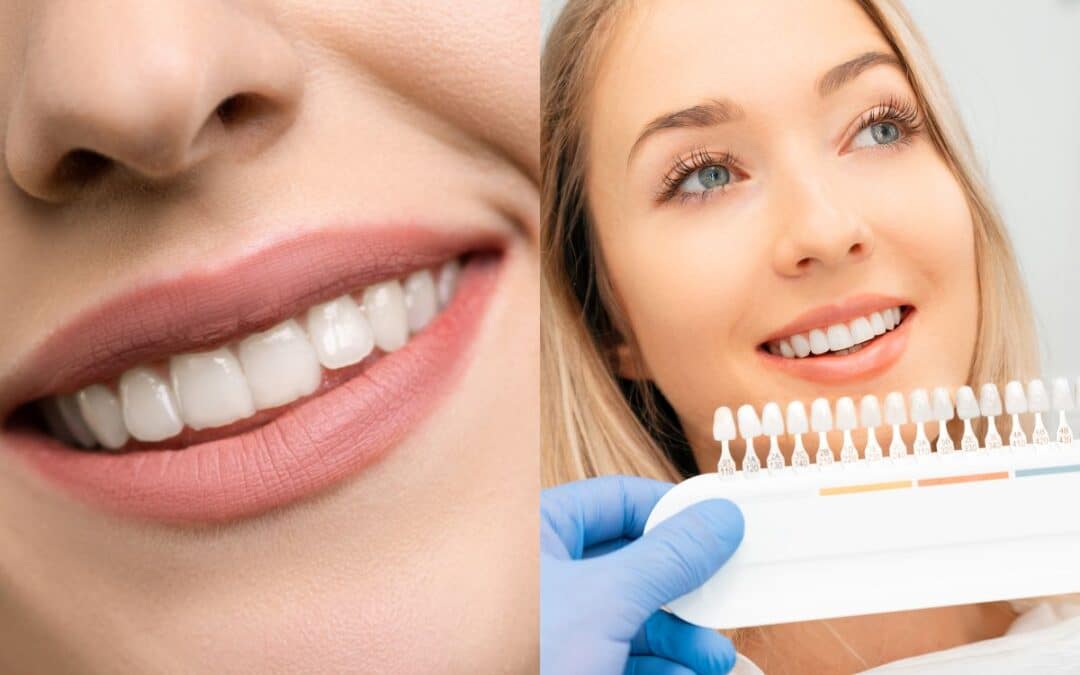
If you’re dealing with stained or discolored teeth, you may be considering two popular cosmetic options: teeth whitening and veneers. Both procedures can dramatically enhance your smile, but each has its benefits and considerations. Choosing between teeth whitening and veneers depends on several factors, including the severity of staining, your desired outcome, and your long-term goals. Here’s a look at how these two treatments compare to help you make an informed decision.
Teeth Whitening: A Quick and Affordable Solution
Teeth whitening is one of the most common and cost-effective methods for brightening a smile. It works by using bleaching agents to lift stains from the enamel, restoring a whiter appearance.
Key Benefits of Teeth Whitening:
- Non-invasive procedure: Teeth whitening involves applying a whitening gel, typically containing hydrogen peroxide, to the teeth. It’s a quick and straightforward process that doesn’t require altering the natural tooth structure.
- Affordable: Professional teeth whitening is generally more inexpensive compared to veneers. The treatment can be completed in a single office visit or with at-home kits provided by your dentist.
- Effective for mild to moderate stains: Teeth whitening is highly effective for surface stains caused by coffee, tea, smoking, and certain foods. However, it may not be as successful for deeper, intrinsic stains.
When Teeth Whitening Is Ideal:
- Your staining is mild to moderate and primarily caused by external factors.
- You’re looking for a quick, budget-friendly solution.
- You prefer a non-invasive approach that preserves your natural tooth structure.
Veneers: A Long-lasting Transformation
Veneers are thin, custom-made shells made of porcelain or composite resin that are bonded to the front of the teeth. They can completely transform your smile by covering stains, chips, gaps, and other imperfections.
Key Benefits of Veneers:
- Comprehensive coverage: Veneers can mask even the most stubborn stains, including those that teeth whitening may not be able to address, such as discoloration from certain medications or deep enamel damage.
- Durable and long-lasting: Porcelain veneers, in particular, are known for their durability and can last up to 15 years or more with proper care.
- Customizable appearance: Veneers offers a highly customizable solution, allowing you to choose the exact shade, shape, and size for your ideal smile.
When Veneers Are Ideal:
- Your staining is severe or caused by intrinsic factors that whitening treatments can’t resolve.
- You’re looking for a longer-lasting cosmetic solution.
- You want to address other issues like chipped or misshapen teeth and staining.
Making the Right Choice for You
Ultimately, the decision between teeth whitening and veneers comes down to your specific needs and goals. If your staining is minor and you’re seeking an affordable, quick fix, teeth whitening may be the best option. On the other hand, if you’re dealing with deeper discoloration or wish to achieve a complete smile makeover, veneers could provide a more comprehensive solution.
Consult with your dentist to evaluate your situation and determine the best treatment to achieve the bright, confident smile you desire. Whether you opt for whitening or veneers, both procedures offer excellent results in enhancing the appearance of your teeth.